Back to School Story Journal for K-2 KID: A Practical Tool for Early Writing and Drawing
When a child first picks up a pencil and tries to form letters, it feels like a small miracle. But ask any kindergarten or first-grade teacher, and they will tell you that the real magic happens when kids start connecting those letters to ideas. That is exactly where a Back to School Story Journal for K-2 KID becomes more than just a notebook. It becomes a bridge between a child's imagination and the written word.
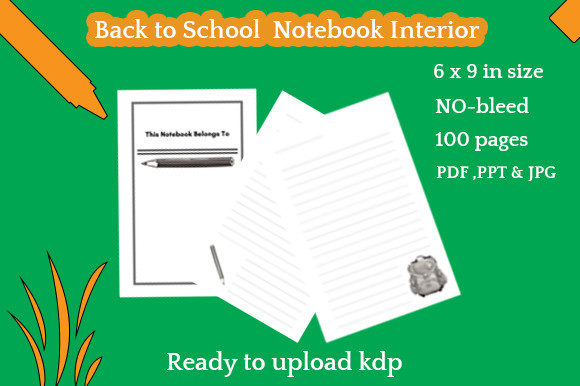
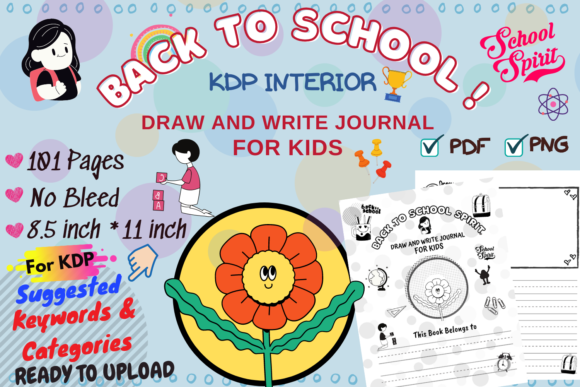
This particular journal, often formatted as a Draw and Write Journal for Kids, combines blank space for pictures with ruled lines that feature a dotted midline. It is designed for children who are still learning how to size their letters correctly. The large 8.5″ x 11″ format gives little hands plenty of room to work without feeling cramped. With 101 pages and no bleed, it is a sturdy companion for a whole semester of creative work.
Let us walk through what this journal actually looks like in real life, who uses it, and why it matters.
What This Journal Actually Does
The core idea behind a Back to School Story Journal for K-2 KID is simple: every page has a top half for drawing and a bottom half for writing. The drawing space invites children to sketch out their thoughts before they try to put them into words. The writing area uses dotted midline paper, which helps young writers understand where lowercase letters should sit and how tall uppercase letters should be.
This format is not just cute. It follows a developmental logic. Young children often think in pictures before they think in sentences. By letting them draw first, you reduce the pressure of writing. The drawing becomes the plan. The writing becomes the explanation. Together, they build confidence.
A primary composition notebook like this one is typically used in classrooms, but it also works beautifully at home. Parents, tutors, and homeschool educators find it especially useful because it gives children a structured yet open-ended space to express themselves.
Morning Routines and Quiet Time
Many parents use a Back to School Story Journal for K-2 KID as part of a morning routine. After breakfast, before the day gets busy, a child can sit down and write about what they are excited about or what they dreamed the night before. This daily habit takes less than fifteen minutes but builds a rhythm of reflection that carries into later grades.
One mother I spoke to keeps her son's journal on the kitchen counter. He draws a quick picture of his favorite toy or something he saw outside, then writes one or two sentences underneath. Some days it is messy. Some days it is just a scribble. But over time, she has watched his letter formation improve without any drilling or pressure.
Classroom Writing Centers
Teachers in kindergarten and first-grade classrooms often set up a writing center with several draw and write journals available. Children rotate through the center during literacy blocks. They might be asked to write about a story they just heard, describe a science experiment, or create their own picture book.
The large 8.5″ x 11″ size is important here. Standard notebooks are too small for young children who are still developing fine motor control. A bigger page means less frustration and more willingness to try.
Homeschool Lessons
Homeschooling families often need flexible tools that work across subjects. A story journal for K-2 kids can be used for language arts, but also for nature journaling, social studies reflections, or even math story problems. A child might draw four apples and then write a sentence about how many apples are left after eating one. The visual component helps them grasp abstract concepts.
One homeschool mom I know uses these journals to document field trips. Her daughter draws what she saw at the farm or the zoo, then dictates a sentence that the mom writes down. As the child's writing skills grow, she takes over the writing herself. The journal becomes a record of progress.
For Parents Who Want to Encourage Writing Without Fighting
If you have ever tried to get a five-year-old to practice handwriting, you know it can turn into a battle. A Back to School Story Journal for K-2 KID sidesteps that struggle by making writing feel like play. The drawing space gives the child control. They decide what to draw. Then, because they already have a picture, they have something to say about it. The writing flows more naturally.
The dotted midline paper is a quiet teacher. Children learn to place their letters correctly without needing constant reminders. Over time, their handwriting becomes more legible, and they feel proud of what they have created.
For Educators Who Need Low-Prep, High-Impact Resources
Teachers are stretched thin. Preparing individualized writing materials for every student is not realistic. A primary composition notebook with a consistent format solves this problem. Every student gets the same tool, but each one fills it with completely different content. Differentiation happens naturally because children write at their own level.
A kindergarten teacher might ask students to draw and write about a character from a read-aloud. A first-grade teacher might ask for a three-sentence story with a beginning, middle, and end. The same journal works for both because the format is flexible.
For Small Business Owners and Creators Creating Products for Kids
If you are a publisher or content creator building educational resources, you likely know that the market for draw and write journals is large and growing. Parents and teachers are always looking for affordable, well-designed materials that actually work. The interior format PDF version of this journal is especially useful because you can upload it to platforms like Amazon KDP and reach a wide audience.
The no bleed feature is a practical detail that matters. When children use markers or water-based pens, the paper needs to hold up. A journal that bleeds through is frustrating. A journal that does not bleed keeps the focus on the content, not the mess.
What to Consider Before Buying or Using This Journal
Not every child is ready for the same level of writing. Some children in kindergarten are still working on holding a pencil correctly. For them, the drawing space will get the most use, and that is fine. The writing lines can be filled with a single letter, a scribble, or a dictated sentence that you write for them. The point is exposure and comfort, not perfection.
For children in second grade, the journal might feel too simple if they are already writing paragraphs. But it can still be useful for creative projects where drawing and writing go together, like comic strips or illustrated stories. Assess your child's fine motor skills and writing stamina before deciding how much they should write per page.
Another thing to consider is whether your child prefers to draw first or write first. Some children need to sketch before they can find the words. Others need to write and then illustrate. The journal accommodates both approaches, but you might need to let go of your own expectations about the order.
If you are using this journal in a classroom, think about how you will store completed journals. After a few months, the pages stack up. Some teachers keep a bin where children place their finished journals. Others send journals home periodically so families can see progress. Decide in advance so the journals do not pile up in a corner.
For those creating a product for KDP, pay attention to the interior format PDF specifications. The 8.5″ x 11″ trim size is standard for print-on-demand, but you need to ensure that your margins and bleed settings match the platform's requirements. A well-formatted interior leads to fewer returns and happier customers.
Real-Life Scenarios That Show How This Journal Works
Scenario one: A six-year-old boy comes home from school and refuses to talk about his day. His mom pulls out the journal and asks him to draw his favorite part. He draws the playground. Then he writes, "I went down the slide." That is four words. For a child who was not writing at all a month ago, those four words are a victory.
Scenario two: A first-grade teacher has a class of twenty-two students with widely varying writing abilities. She gives each child the same draw and write journal. Some children write one sentence. Others write five. The drawings range from stick figures to detailed scenes. Every child succeeds because the task is open-ended.
Scenario three: A homeschool parent wants to combine art and language arts. Her daughter draws a picture of a cat, then writes a short story from the cat's perspective. The journal becomes a portfolio piece that she includes in her end-of-year assessment. The parent sees growth in both writing skill and creative thinking.
Why This Format Matters for Early Childhood Development
Writing and drawing are not separate skills. They both rely on the same underlying abilities: fine motor control, visual planning, and the ability to sequence ideas. A story journal for early childhood supports all of these at once.
The dotted midline paper is especially important for children who struggle with letter sizing. When a child writes an "a" that floats above the line or a "p" that does not drop below, they get visual feedback from the paper itself. The midline and baseline create a clear reference. Over time, children internalize these proportions and their handwriting becomes more consistent.
The drawing space also encourages children to think visually. This is a skill that helps with reading comprehension, problem-solving, and even math. When a child draws a picture to go with a story, they are practicing summarization. They have to decide what is important enough to include.
Bringing It All Together
A Back to School Story Journal for K-2 KID is not a magic solution, but it is a genuinely useful tool. It works because it respects where children are developmentally. It gives them space to draw, room to write, and a structure that does not feel like a test.
Whether you are a parent trying to nurture a love of writing, a teacher managing a busy classroom, or a creator building products that families actually use, this journal format deserves a spot in your rotation. It is simple, practical, and effective.
When you see a child's face light up after they finish a page, you will understand why this little notebook matters so much.