Paraprofessional Back to School: Strategic Design Assets for Professional Communication and Branding
Returning to the classroom as a paraprofessional brings a distinct set of responsibilities, relationships, and opportunities. Whether you support students with special needs, assist in early childhood classrooms, or reinforce instruction across grade levels, the beginning of the school year is a moment to establish presence, build rapport, and communicate your role with clarity. A thoughtfully designed visual identity can support all of these goals. The Paraprofessional Back to School SVG design file offers a practical, flexible resource for creating physical and digital materials that reinforce your professional identity, support team cohesion, and enhance communication with students, families, and colleagues.
What the Paraprofessional Back to School Design File Offers
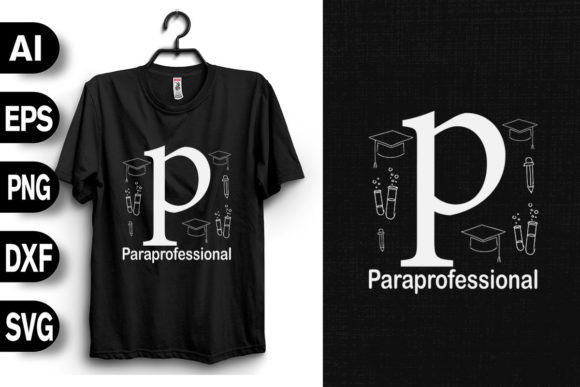
This design file is a digital asset package that includes formats compatible with a wide range of tools and workflows: SVG, AI, EPS, PNG, and DXF. These formats are standard for cutting machines such as Cricut and Silhouette, but they also work for digital printing, screen printing, and graphic design software. A single purchase provides a zip file containing all formats, giving you the freedom to produce materials across multiple surfaces and products. You can create t-shirts for a school team, hoodies for a paraprofessional cohort, tote bags for daily carry, mugs for the staff room, stickers for student rewards, banners for classroom or hallway displays, pop sockets for phones, phone cases, flyers for events or recruitment, and more.
Because the design is delivered in vector formats, scaling the artwork for small stickers or large banners does not compromise quality. This versatility removes the need to redesign from scratch for each medium, saving time and ensuring consistent branding across touchpoints. For anyone responsible for classroom materials, school communications, or team merchandise, this file becomes a reusable foundation rather than a one-off graphic.
Strategic Value for Paraprofessionals and School Teams
Using a unified design across multiple products supports several strategic objectives. First, it establishes visual consistency. When a paraprofessional team wears matching t-shirts or carries coordinated tote bags, it signals unity and professionalism. For parents and students, this consistency makes it easier to identify who can provide assistance, answer questions, or offer support. In busy school environments, clear visual cues reduce confusion and help build trust.
Second, the design file supports communication goals. A well-placed sticker on a laptop or water bottle can subtly reinforce the paraprofessional role. A banner in a classroom or hallway can welcome students and families while clarifying the support services available. Flyers created from the design can be distributed during open houses, parent-teacher conferences, or professional development events to explain the paraprofessional role, outline services, or invite collaboration. The design becomes a tool for education and outreach, not just decoration.
Third, the file enables creative productivity without requiring advanced design skills. Because the artwork is pre-created and ready for cutting or printing, you can produce professional-looking materials within minutes. This efficiency matters when preparation time is limited, budgets are tight, and multiple demands compete for attention. Instead of spending hours creating graphics from scratch, you can focus on preparing for students, planning lessons, or coordinating with teachers.
When to Use the Design File for Maximum Impact
Timing and context matter. The beginning of the school year is the most obvious window, but the design file can be applied throughout the academic calendar. Consider these strategic moments:
- Staff training and team building. Distribute matching t-shirts or hoodies during pre-service training days. This creates a shared identity before students arrive and fosters a sense of belonging among paraprofessionals who may work across different classrooms or grade levels.
- Open houses and family events. Use banners, flyers, or stickers to introduce the paraprofessional team to parents. Include a brief description of how paraprofessionals support student learning and behavior. This proactive communication reduces misunderstandings and builds collaborative relationships.
- Student incentives and rewards. Create small stickers or pop sockets with the design to recognize student effort or achievement. When students receive a tangible item tied to the paraprofessional team, it reinforces positive connections and demonstrates that support staff are integral to the school culture.
- Awareness campaigns or appreciation events. Paraprofessional Appreciation Week or School Support Staff Day present opportunities to highlight the role. Flyers, banners, and mugs can be used to celebrate contributions and educate the broader school community.
- Recruitment and volunteer outreach. If your school or district is hiring paraprofessionals, a flyer or banner at community events can attract candidates. A consistent visual identity signals that the school values its support staff and invests in their recognition.
Approaching the design file as a seasonal asset rather than a one-time purchase increases its return on investment. By storing the vector files and reusing them for different products across different occasions, you build a library of materials that can be updated or adapted as needs evolve.
Practical Considerations Before Producing Materials
Before you order t-shirts, print stickers, or cut vinyl decals, consider your audience, your context, and your budget. A few strategic questions can prevent wasted resources and ensure the finished product aligns with your goals.
Who will see or use these items? If the primary audience is students, choose products that are age-appropriate and durable. Stickers and pop sockets appeal to younger students, while mugs and tote bags are more suitable for adults. If the items are for staff, consider preferences around fabric type, mug size, or bag style. A quick survey among colleagues can reveal what people will actually use.
What message do you want to communicate? The design file includes the phrase "Paraprofessional Back to School." Consider whether you want to emphasize the role, the timing, or both. You might pair the design with additional text such as "Here to Help," "Supporting Every Student," or your school name. Leaving room for customization or layering text can make the design more specific to your setting.
How will items be distributed? If you are ordering t-shirts for a team, plan for sizing and ensure everyone receives the correct fit. If you are creating flyers for a bulletin board, think about where they will be posted and whether they need to be laminated for durability. Small giveaways like stickers can be handed out at events or included in welcome packets.
What is your production method? The file works with cutting machines and digital printers. For fabric items, heat transfer vinyl or screen printing are common approaches. For hard surfaces like mugs or phone cases, sublimation printing or adhesive vinyl may be appropriate. If you are not producing items yourself, share the vector file with a local print shop or online service. Many print-on-demand platforms accept SVG, AI, EPS, or PNG files directly.
Risks of Using the Design Without Clear Goals
Like any creative asset, the Paraprofessional Back to School design file can be used effectively or ineffectively. The most common risk is producing materials that do not connect with the intended audience because the purpose was not defined in advance. A t-shirt that sits unworn in a drawer or a banner that goes unnoticed in a hallway represents wasted time and money.
Another risk is inconsistent messaging. If the design is applied to some materials but not others, the visual identity becomes fragmented. Parents or students may not associate the design with the paraprofessional team if they see it only occasionally on a single product. Consistency across multiple touchpoints strengthens recognition.
There is also the risk of overproducing without considering actual need. Ordering hundreds of stickers or mugs without a distribution plan can lead to surplus inventory that clogs storage closets. Start with a small batch, test the response, and scale up only after confirming that people value the items.
Finally, avoid using the design in ways that undermine professionalism. Avoid placing the graphic on products that are likely to wear out quickly or look unprofessional in a school setting. Choose quality materials and production methods that reflect the respect you want the role to receive.
How to Use the Design File Intentionally
Strategic use begins with a simple plan. Identify one or two products that will have the greatest impact for your context. For a paraprofessional team starting the year, matching t-shirts or hoodies create immediate visibility and unity. For an individual paraprofessional who works across multiple classrooms, a tote bag or laptop sticker can serve as a subtle identifier throughout the day.
Pair the design with a clear message about your role. When distributing items, include a brief note, email, or verbal explanation about what paraprofessionals do and how they contribute to student success. This turns a physical product into a conversation starter and an educational tool.
Coordinate with school leadership or the paraprofessional coordinator to ensure alignment with broader school communication efforts. If the school already uses specific colors, fonts, or logos, consider how the design can complement rather than conflict with existing materials. Consistency across all staff communications reinforces a cohesive school identity.
Plan for reuse. Store the vector files in a shared drive or cloud folder so they remain accessible throughout the year. As new paraprofessionals join the team or new products become relevant, you can produce additional materials without repurchasing the design. Tag the files with keywords and dates to make retrieval easy.
Long-Term Value Beyond the First Day
The Paraprofessional Back to School design file is not limited to the opening weeks of the academic year. Its value extends across semesters, school events, and even into the following year. Because the file includes multiple formats, it can be adapted for different seasons or themes by layering additional graphics or text. For example, a winter version could pair the design with seasonal colors, or a spring version could include motivational language about finishing strong.
For school districts or organizations that employ multiple paraprofessionals, this design can become part of a broader staff identity system. Match it with custom colors or departmental identifiers to create a family of materials that distinguishes different support teams while maintaining a unified look. Over time, the design becomes recognizable to students, parents, and colleagues as a symbol of dedicated support.
For individual creators and entrepreneurs who design products for educators, this file also represents a commercial opportunity. You can produce items for local schools, sell them at educator conferences, or offer them through online marketplaces. The vector formats make batch production efficient, and the popularity of paraprofessional recognition ensures ongoing demand.
Decision-Making Guidance for Buyers
Before purchasing, assess whether the design aligns with the tone and culture of your school or organization. Look at the style, typography, and overall aesthetic. If it resonates with your team and your audience, it will serve you well. If it does not fit, you may need to customize it or look for an alternative design that better reflects your context.
Check the file specifications against your production equipment. If you use a Cricut machine, SVG format is typically preferred. For Silhouette users, DXF or SVG work well. If you are working with a commercial printer, AI or EPS files are often requested, and PNG is useful for quick mockups or digital use. The zip file in this product covers all these needs.
Consider your budget for production materials. The design file itself is a one-time investment, but the cost of blank products, inks, transfer materials, or printing services will add up. Plan your production in phases. Start with the product that offers the highest visibility or utility, and expand as your budget allows.
Finally, ensure that you have permission to use the design for your intended purpose. This product is sold for personal and commercial use, but specific terms vary by seller. Review the license details to confirm whether you can sell finished items, adapt the design, or use it for large-scale distribution. Respecting the creator's terms supports a healthy marketplace for digital assets.
The Paraprofessional Back to School SVG design file offers a starting point for intentional, consistent, and professional communication. When used with clear goals and thoughtful planning, it becomes more than a graphic. It becomes a tool for connection, recognition, and long-term impact in the school community.