Back to School Signage Templates: A Practical Guide for Educators and Administrators
When the new school year approaches, schools, districts, and educational organizations face the recurring challenge of communicating effectively with students, parents, and staff. From welcome signs and classroom door labels to cafeteria menus and hallway directional markers, signage plays a critical role in guiding behavior, conveying information, and setting a positive tone. Back to School Signage Templates refer to pre-designed vector illustration files—typically in EPS 10 and AI formats—that can be edited to suit specific needs. They are intended for use in promotions, announcements, information displays, and other school-related communications. This article offers a balanced evaluation of these templates, helping you determine whether they align with your goals, resources, and operational realities.
What Are Back to School Signage Templates?
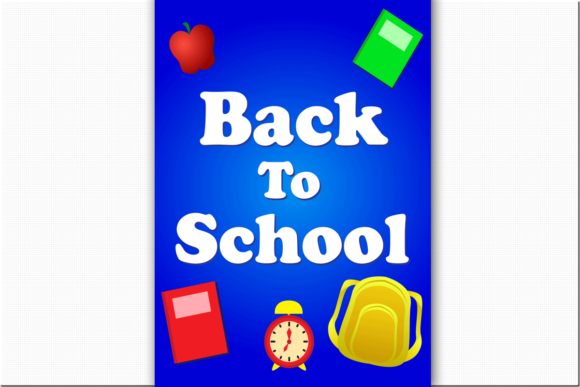
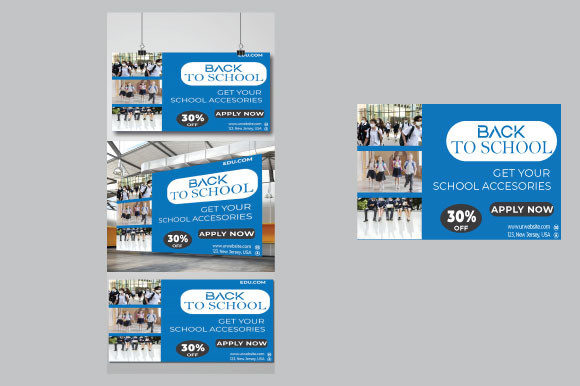
These templates are digital design files that include reusable vector graphics, typography, and layout structures for common back-to-school signage needs. A typical set may include a banner template, poster designs, and smaller sign formats, all provided as editable vector files. Key features often cited include high resolution, organized layers, and compatibility with Adobe Illustrator (AI) and EPS 10. The inclusion of two preview JPG images allows quick visual assessment without opening the source files. Because the designs are vector-based, they scale without loss of quality—whether printed on a small desk tent or a large hallway banner.
For many schools, these templates represent a middle ground between hiring a professional graphic designer and creating signs from scratch with basic office software. They offer a structured starting point that can be customized to reflect a school's colors, logo, messaging, and specific event details.
Why Consider These Templates?
Several practical motivations drive interest in pre-made signage templates:
- Time savings: Designing signage from scratch requires skills and time that busy administrators and teachers rarely have. Templates reduce the design phase significantly.
- Professional appearance: Well-crafted templates incorporate design principles—balanced layouts, readable typography, and visual hierarchy—that might be difficult to achieve without training.
- Consistency across communications: Using a unified template family ensures that all signs share a coherent look, which reinforces school branding and reduces visual clutter.
- Scalability and flexibility: Vector files allow for resizing to any dimension, from small table cards to large banners, without pixelation.
- Editability: Organized layers make it straightforward to swap text, adjust colors, or replace imagery without accidentally altering other elements.
These factors are especially appealing for schools that produce a high volume of signage each year but operate with limited design resources.
High Resolution and Print Readiness
Unlike many web-based design tools that output raster images at fixed resolutions, vector-based EPS 10 and AI files maintain crisp edges and smooth curves at any print size. When paired with the high-resolution preview JPGs, you can verify the layout before committing to a print run. This is particularly valuable for large-format items like welcome banners or directional signs in gymnasiums and auditoriums.
Organized Layers Streamline Editing
A well-structured template includes clearly named layers—background, text blocks, decorative elements, and illustrations. This organization means that a user with basic Illustrator skills can edit the text for a classroom door sign without accidentally moving the background graphic. For power users, layers also support versioning: you can duplicate the file, adjust the grade level or event date, and produce multiple signs from one base template.
Versatility Across Use Cases
Because the templates are described as usable for "offer, promotion, announcement, information, and so on," they can serve a wide range of needs. Examples include:
- Welcome banners for the school entrance
- Classroom schedules and rules posters
- Event signage for open houses, meet-the-teacher nights, or fundraisers
- Wayfinding signs for new students and visitors
- Menu boards in the cafeteria
- Safety and procedure reminders in hallways and common areas
This breadth of application makes the template set a potential one-time investment that covers multiple communication needs throughout the year.
Tradeoffs and Practical Considerations
While these templates offer clear advantages, they also come with limitations that should be weighed carefully.
Software Requirements and Learning Curve
EPS 10 and AI files require Adobe Illustrator or a compatible vector editing program. This software carries a subscription cost and has a learning curve. Staff members with no prior experience in vector design may find the interface challenging, even with organized layers. Schools should assess whether they have access to the necessary software and someone with at least basic proficiency to make edits.
Consideration: If your school does not have Illustrator, you might consider alternatives like Inkscape (free) which can often open EPS files, though compatibility is not guaranteed. Some template providers also offer preview JPGs that can be used as low-resolution stand-ins, but editing the vector file itself remains the primary intended workflow.
Generic vs. Custom Design
Templates are by nature generic. They are designed to appeal to a broad audience, which means they may not capture the unique character of your school or district. While you can change colors and add your logo, the underlying illustration style—perhaps a cartoon bus, a stack of books, or a chalkboard motif—may feel generic or misaligned with your branding guidelines.
Consideration: For schools that prioritize a distinct visual identity, a custom design approach or a more flexible template set (with minimal pre-designed illustrations) may be a better fit. Evaluate the template's illustration style critically: does it reflect the age group and culture of your school?
Layer Organization Variability
Not all templates are created equal. The description promises "organized layers," but the actual quality of organization can vary between providers. Poorly organized layers—unlabeled, nested without logic, or containing extraneous elements—can negate the ease-of-use benefit. If possible, obtain a sample file or check reviews from other educators before purchasing.
File Format Compatibility
EPS 10 is a relatively old version of the EPS standard. While most modern design software can open it, some newer programs or online editors may not fully support all features. The inclusion of AI format provides a more modern alternative, but both formats are primarily associated with Adobe's ecosystem. Schools using entirely web-based design tools (Canva, Adobe Express) may find these files less directly useful unless they can convert or import them.
When Are These Templates a Strong Fit?
Back to School Signage Templates work best in situations where:
- Volume is high: You need to produce dozens of signs for multiple classrooms, events, or buildings. Templates drastically reduce repetition.
- Time is constrained: You are preparing for the school year with limited staff hours. Starting from a professional template saves days of work.
- Consistency matters: You want all signage to share a visual theme—colors, fonts, and layout structures—without having to manually coordinate each piece.
- You have Illustrator access: At least one person on your team can use Illustrator at a basic level, or you are willing to invest in training for that person.
- Print quality is essential: You plan to print on larger formats or on high-quality paper where pixelation would be noticeable.
Schools with a dedicated communications or media specialist, or those that partner with a parent volunteer skilled in design, will find these templates especially useful.
When Alternatives May Be Worth Considering
There are scenarios where a different approach might serve you better.
- No access to vector software: If your team relies entirely on free or web-based tools like Canva, Google Slides, or Microsoft Publisher, a template requiring Illustrator may be more trouble than it is worth. In such cases, look for templates offered in PowerPoint, Google Slides, or Canva formats.
- Highly unique branding: If your school has a very specific visual identity—mascot illustrations, custom fonts, or a particular color palette that is difficult to map onto a pre-made design—a custom design from scratch may be more efficient than trying to retrofit a generic template.
- Low-volume, one-off needs: For a single welcome sign or a small batch of posters, the setup time required to learn the template and edit layers may exceed the time needed to create a simple sign from scratch using basic tools.
- Budget constraints: While templates are often less expensive than hiring a designer, they are not free. If your school’s budget is extremely limited, free templates (from sources that permit school use) or student-created designs could be viable alternatives.
- Need for real-time collaboration: If multiple staff members need to edit signs simultaneously or submit changes via a shared platform, cloud-based tools like Canva or Google Workspace offer superior collaboration features compared to shared AI/EPS files.
Practical Decision-Making Insights
To determine whether Back to School Signage Templates are right for your situation, consider the following steps:
- Assess your team's skills: Identify who would be responsible for editing the templates. If that person is comfortable with vector software, proceed. If not, factor in training time or consider alternative formats.
- Evaluate your software resources: Confirm that you have a compatible program installed and correctly licensed. If not, weigh the cost of acquiring the software against the expected volume of use.
- Define your signage needs for the year: List the specific signs you intend to produce. Consider whether the template set covers those formats (banners, posters, labels) or if you would need to supplement it with other solutions.
- Request a sample if possible: Many sellers offer a preview JPG, but ask for a sample editable file to test layer organization and ease of use. This small investment of time can prevent frustration later.
- Consider long-term reuse: Templates that can be updated annually—changing dates, names, or announcements—provide ongoing value. Evaluate whether the design is timeless enough to feel fresh in subsequent years.
- Balance quality with effort: If professional appearance is a high priority but custom design is out of reach, templates represent a strong compromise. If your school community values a homemade or student-created look, simplicity may be preferable.
Aligning with Your Goals and Needs
Ultimately, the decision hinges on your specific context. Back to School Signage Templates are not a universal solution, but they are a practical tool for many schools. They offer a structured, scalable path to professional-looking signage without requiring a graphic design degree or a large budget. The tradeoffs involve software dependency, a degree of design rigidity, and the need for at least one person with moderate technical skills.
If your goal is to produce clear, consistent, and attractive signage efficiently—and you have the tools and minimal expertise to make it happen—these templates likely represent a sound investment. If your circumstances are constrained by software access, unique branding requirements, or very low volume, exploring alternatives such as web-based design platforms or custom work from a local designer may yield a better outcome.
By evaluating your school's capacity, priorities, and print needs, you can make an informed choice that supports effective communication throughout the school year and beyond.